
North Carolina Deed Records
North Carolina deed records are kept by the Register of Deeds in each of the 100 counties. These offices hold deeds, deeds of trust, plats, and other land records tied to real property. You can search North Carolina deed records online through county portals or in person at the local office. The North Carolina Association of Registers of Deeds links all 100 offices and helps the public find deed records across the state. Whether you need a current deed or a land record from decades past, North Carolina deed records are open to the public.
North Carolina Deed Records Quick Facts
Where to Find North Carolina Deed Records
Each county in North Carolina has a Register of Deeds office. This is where all land documents get filed and stored. The Register of Deeds records deeds, deeds of trust, mortgages, satisfactions, assignments, plats, and other instruments tied to real property. Under N.C.G.S. Chapter 161, the Register of Deeds must keep full and complete indexes of all recorded instruments. Each register serves a four-year term and is elected by the voters in that county. The office exists to give property owners a way to put the public on notice of their ownership.
You can find your local Register of Deeds through the NCARD directory, which lists all 100 offices with phone numbers, addresses, and links to each county website. Most offices are open Monday through Friday from 8:00 AM to 5:00 PM. Some close earlier for recording, so call ahead if you plan to file a document. Many counties now accept documents through electronic recording as well.
Note: Each county maintains its own records, so you must search in the county where the property is located.
How to Search Deed Records in North Carolina
Most counties in North Carolina offer online search portals for deed records. These systems let you look up deeds by grantor name, grantee name, book and page number, document type, or recording date. Some counties provide free access. Others charge a small fee for full document images. In-person searches at the Register of Deeds office are always free. Staff at the office can help you find what you need and make copies on the spot.
Online search tools vary by county. Some use systems like Cott Hosting, while others run their own platforms. You can search from home at any time. Results typically show the recording date, parties involved, book and page reference, and a link to view the document image. Certified copies cost $5 for the first page and $2 for each page after that in most North Carolina counties. Uncertified copies run about $0.25 per page when you pick them up at the office.
To search North Carolina deed records effectively, have at least one of these:
- Full name of the grantor or grantee
- Property address or parcel number
- Book and page or document number
- Approximate recording date range
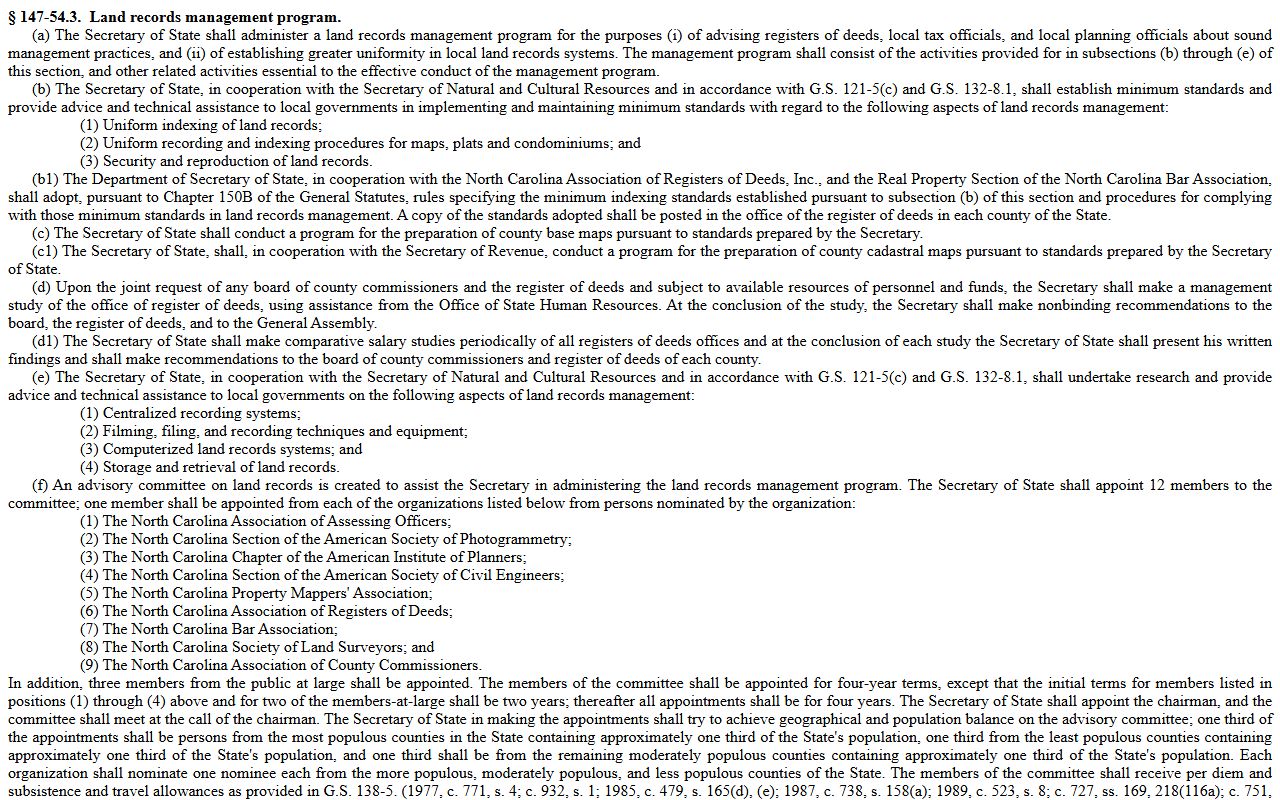
Names in the index appear exactly as they were written on the original document. Old records may have different spellings for the same person. Try name variations if your first search does not return results. The Land Records Management Program under the Secretary of State works to bring more uniform indexing to deed records across North Carolina.
North Carolina Race to Record System
North Carolina is a "race to record" state. This matters for anyone buying or selling property. Under G.S. 47-18, known as the Conner Act, the first person to record a deed at the Register of Deeds office holds priority over later recordings. No conveyance of land is valid against creditors or purchasers for value until it is recorded in the county where the property sits. This is why recording your deed right away is so important in North Carolina.
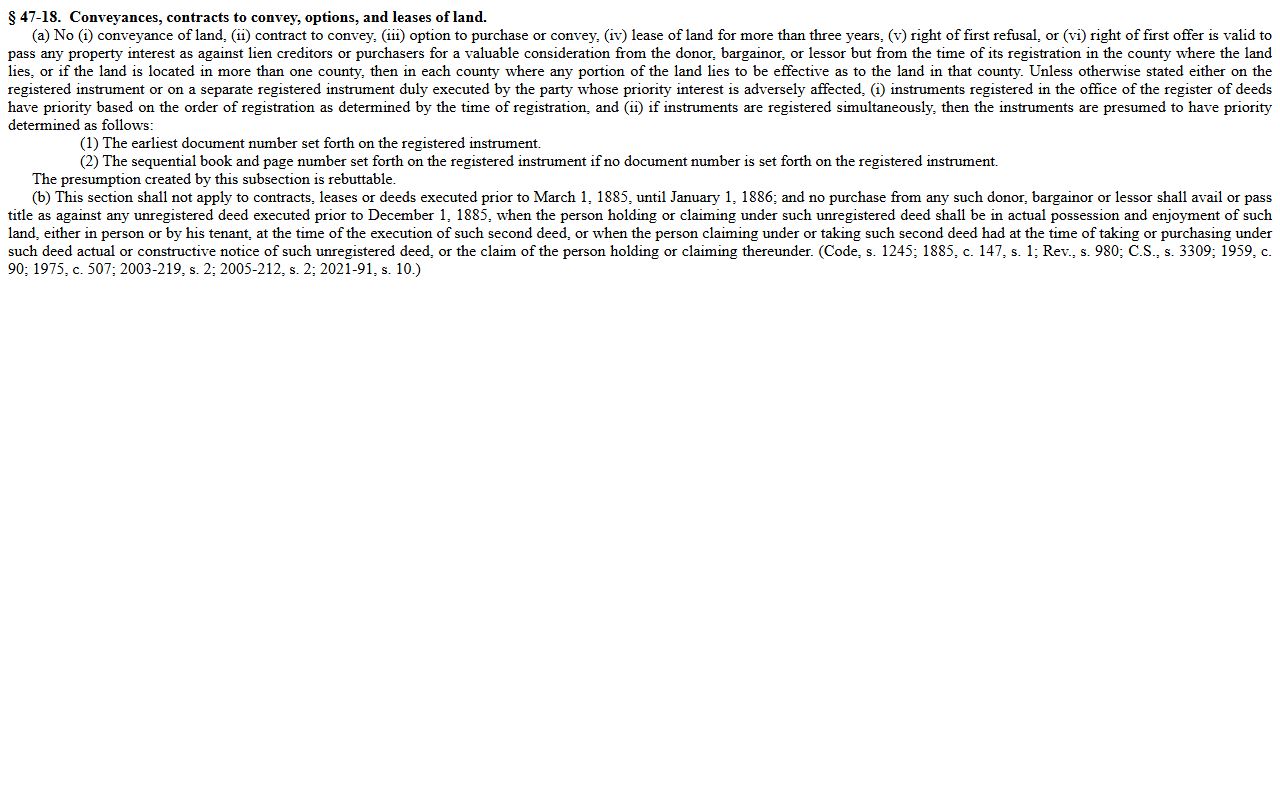
If two people claim the same property, the one who recorded first wins. Time of recording sets the order. If instruments are filed at the same time, the lowest document number or the first book and page number takes priority. This system makes North Carolina deed records critical for protecting property rights.
Deed Recording Requirements in North Carolina
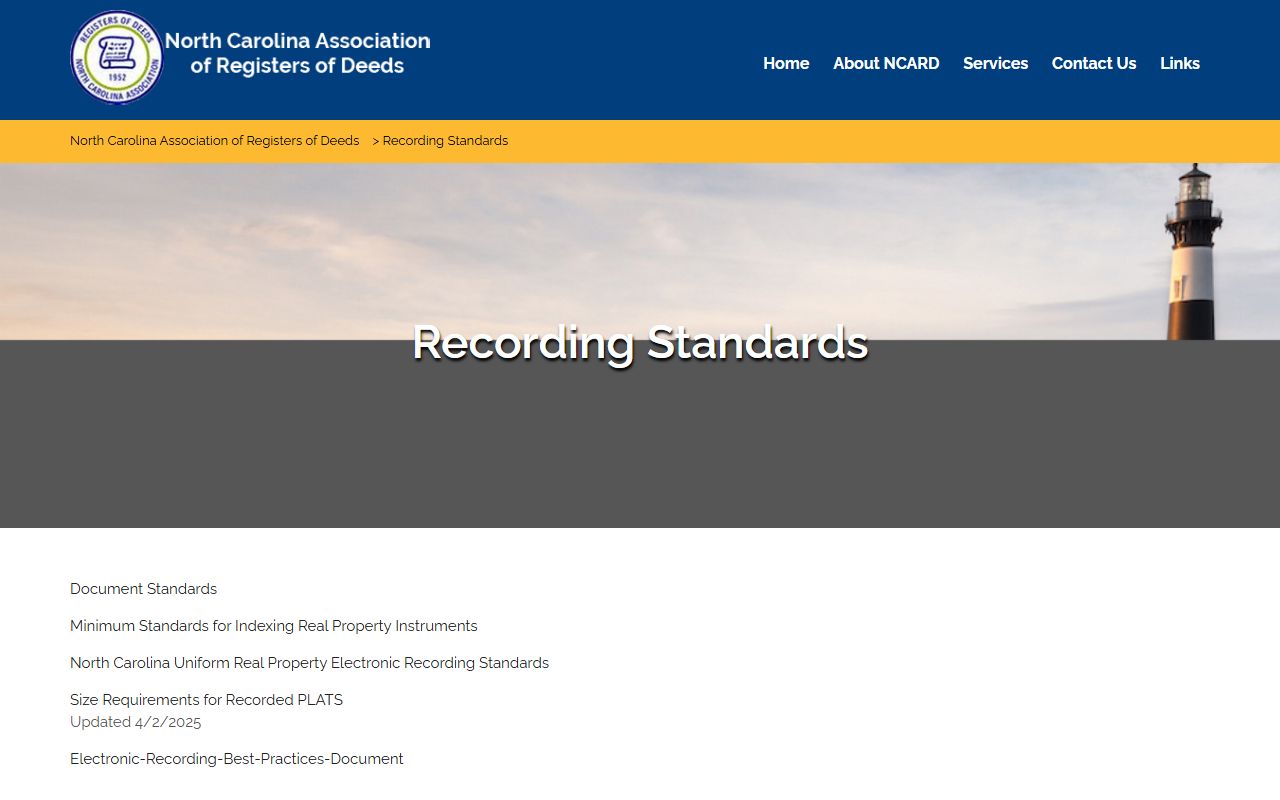
North Carolina has strict rules for documents presented for recording. Under G.S. 161-14, all paper instruments must meet formatting standards before the Register of Deeds will accept them. Documents must be printed in black ink on white paper with a legible font no smaller than 9 points. The first page needs a three-inch blank margin at the top and half-inch margins on all other sides. Only one side of each page can have text. Documents that do not meet these standards are charged a $25 nonstandard document fee on top of regular recording fees.
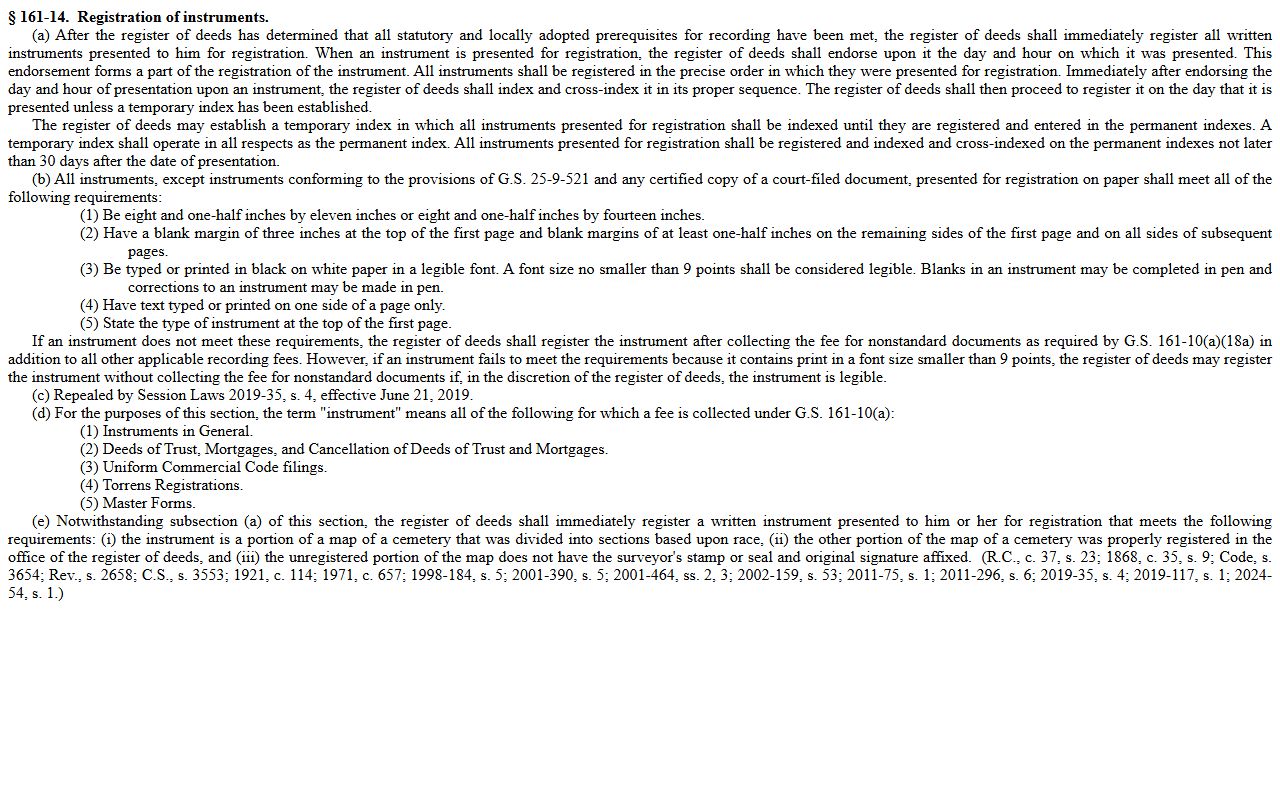
Paper size must be 8.5 by 11 inches or 8.5 by 14 inches. Every deed or deed of trust filed after January 1, 1980 must show the name of the person who drafted the document on the first page, per G.S. 47-17.1. The Register of Deeds checks that all legal requirements are met before recording any instrument. Once accepted, the register stamps the day and hour of filing on the document. The NCARD recording standards page lists all current formatting and indexing requirements.
North Carolina Deed Records Fees
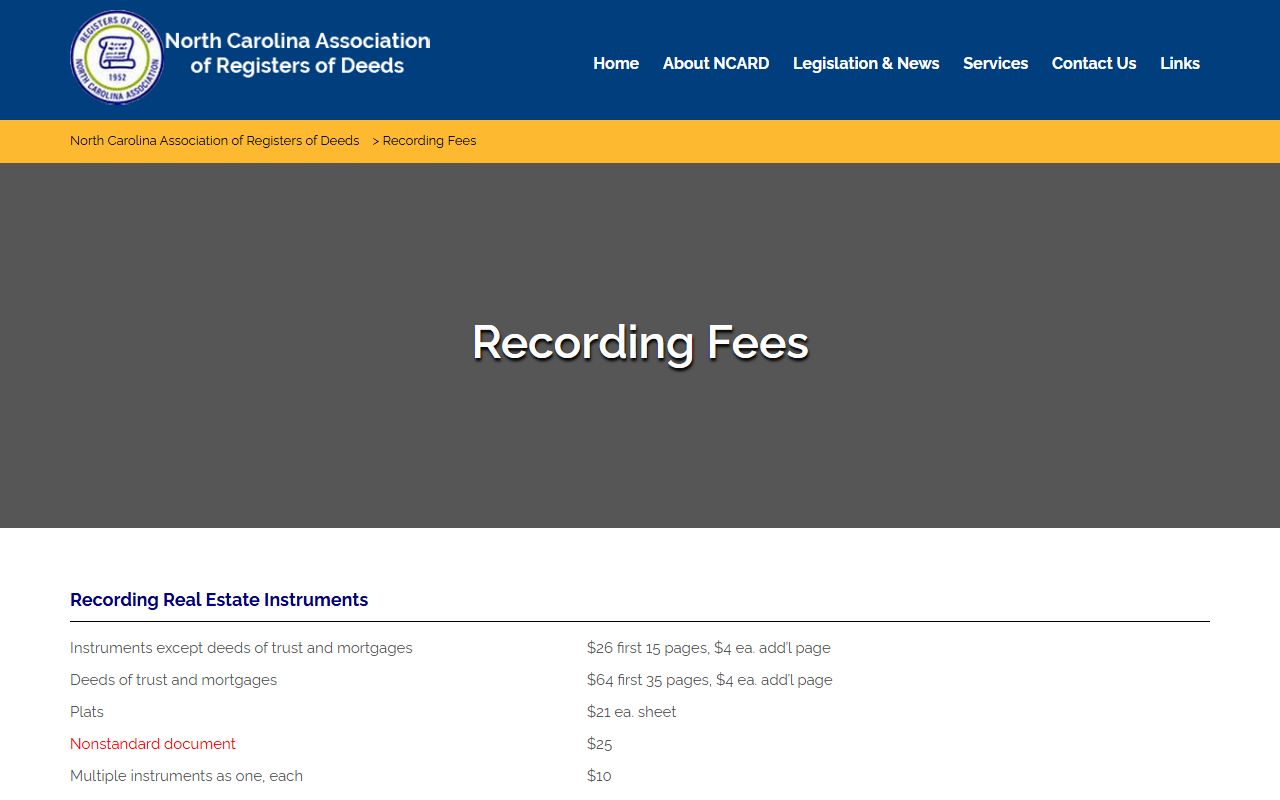
Recording fees in North Carolina are set by state law under G.S. 161-10. All 100 counties follow the same fee schedule. The base fee for recording a deed or other real estate instrument is $26 for the first 15 pages, plus $4 for each page after that. Deeds of trust and mortgages cost $64 for the first 35 pages, plus $4 per additional page. Plats cost $21 per sheet. Satisfaction instruments have no recording fee. The NCARD recording fees page has the full fee schedule.
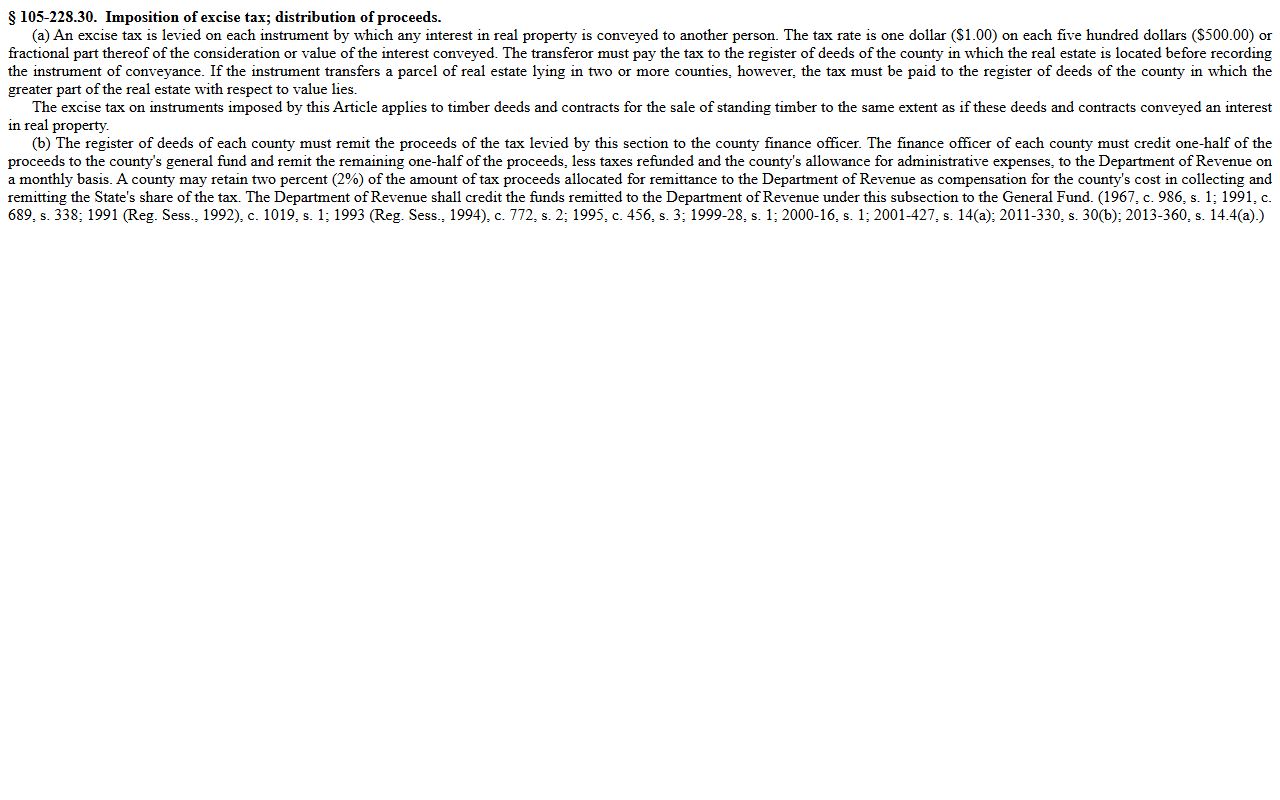
North Carolina also charges an excise tax on property transfers. Under G.S. 105-228.30, the rate is $1 for every $500 of the sale price or fraction thereof. The buyer or transferor pays this tax to the Register of Deeds before the deed can be recorded. If a property spans two or more counties, the tax goes to the county where the greater share of value lies.
Note: Fees apply uniformly across all North Carolina counties, but always confirm with the local office before filing.
Probate and Registration of Deed Records
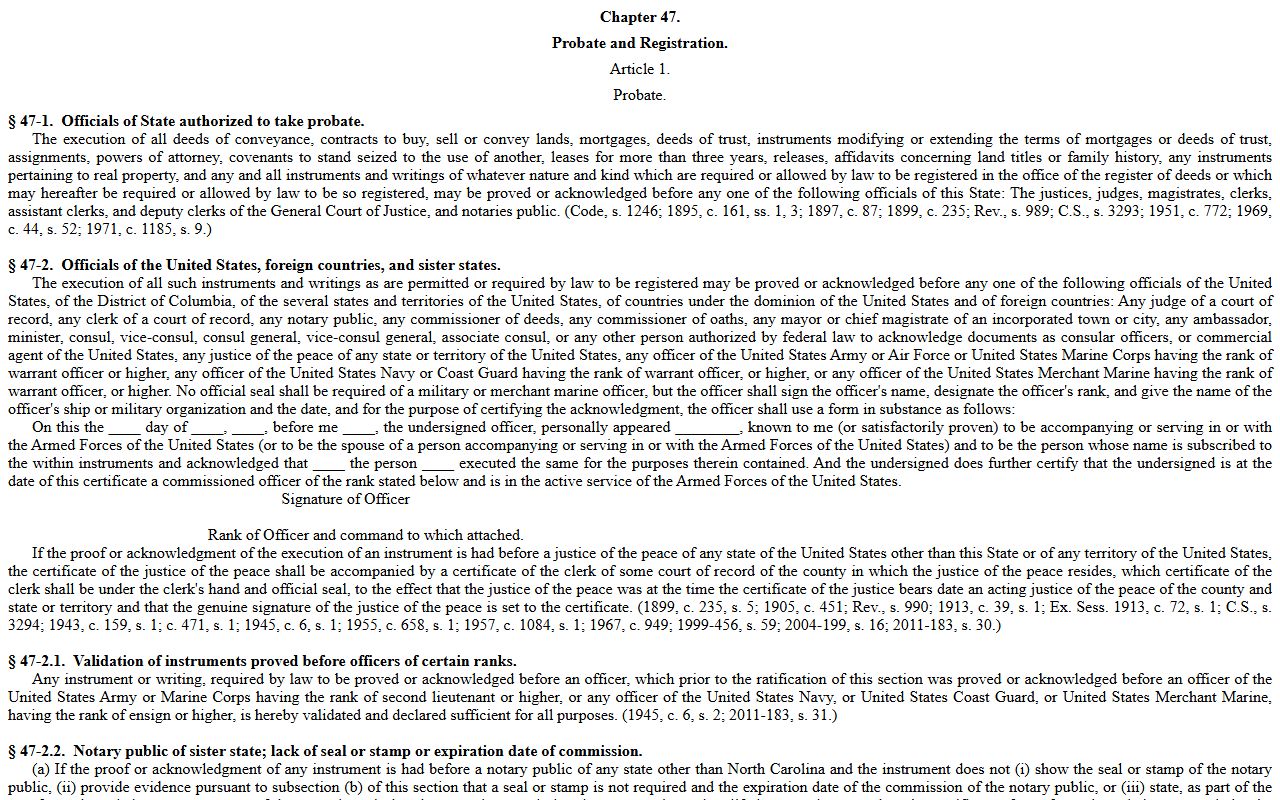
Before a deed can be recorded in North Carolina, it must be properly acknowledged or proven. Under G.S. 47-17, the grantor must acknowledge the deed before an officer with authority to take acknowledgments, or a witness must prove the grantor's signature under oath. The Register of Deeds will not accept an instrument for recording unless the execution appears to have been properly acknowledged or proven, as required by G.S. 47-14.
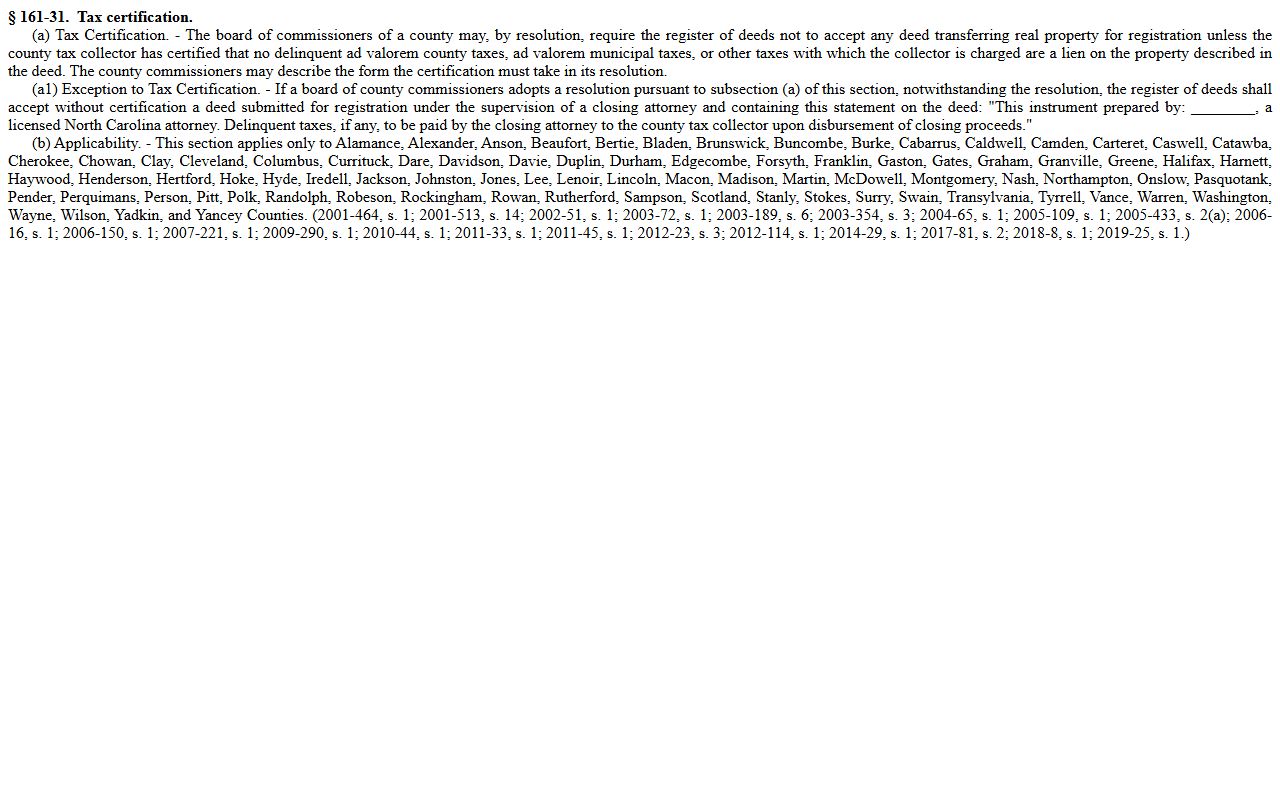
Some counties require tax certification before they will record a deed. Under G.S. 161-31, the county board of commissioners may pass a resolution requiring the tax collector to certify that no delinquent taxes exist on the property before the deed can be filed. A closing attorney can bypass this step by including a statement that delinquent taxes will be paid from closing proceeds. Not all counties enforce this requirement, so check with the local Register of Deeds office.
Electronic Recording of Deed Records
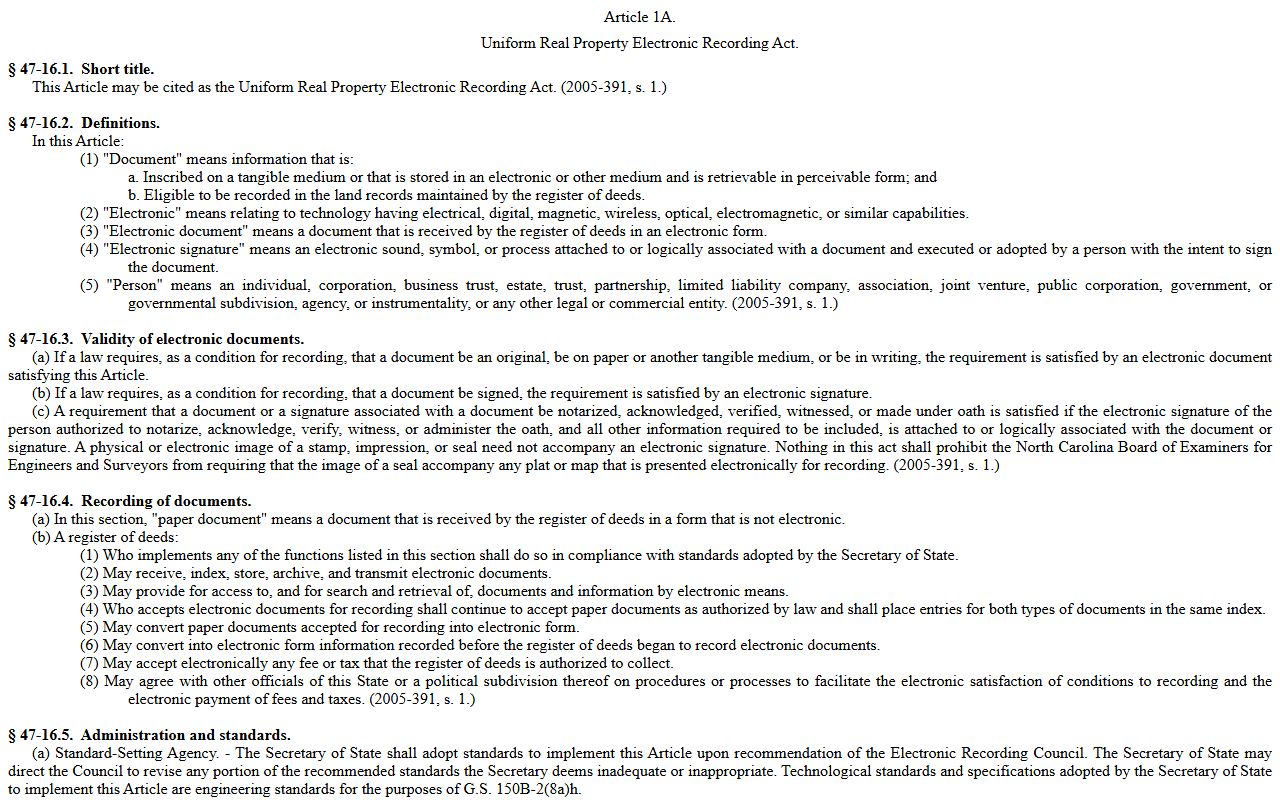
Many North Carolina counties now accept deed records through electronic recording. The Uniform Real Property Electronic Recording Act (G.S. 47-16.1 through 47-16.7) allows electronic documents and electronic signatures for recording. If state law requires a document to be an original or on paper, an electronic version that meets the Act's standards satisfies that requirement.
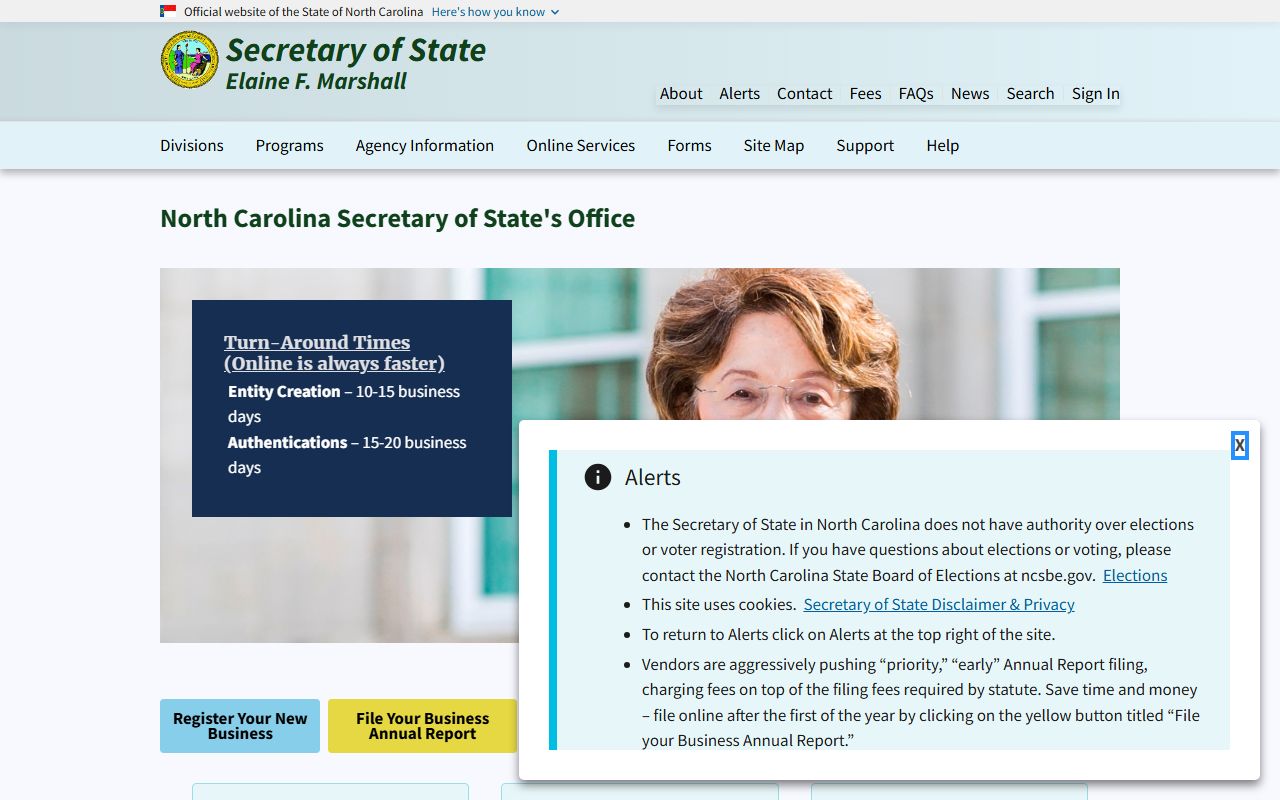
The North Carolina Secretary of State oversees the Electronic Recording Council. This council has 13 members from groups like NCARD, the NC Bar Association, the NC Land Title Association, and the NC Bankers Association. They set the standards for electronic recording statewide. NCARD lists which counties currently support eRecording on their website. Electronic recording speeds up the filing process and helps protect North Carolina deed records from delays.
Deed Records Indexing in North Carolina
The Register of Deeds in each county must maintain full alphabetical indexes of all recorded instruments. Under G.S. 161-22, these indexes include the names of all parties to deeds, mortgages, liens, and other instruments. The North Carolina General Statutes require cross-indexing so that a document can be found by searching for any party named in it. The Secretary of State, through the Land Records Management Program, sets minimum indexing standards to keep records uniform across all 100 counties.
North Carolina deed records are public records. Anyone can search them. You do not need to own the property or be a party to the deed. The North Carolina State Bar notes that recording a deed puts the entire world on notice of the ownership interest. This public notice function is the core purpose of the deed recording system in North Carolina.
Browse North Carolina Deed Records by County
Each county in North Carolina has its own Register of Deeds that keeps deed records. Pick a county below to find local search tools, office contact info, and recording resources for deed records in that area.
Deed Records in Major North Carolina Cities
Residents of major cities access deed records through their county Register of Deeds office. Pick a city below to learn about deed records in that area.