
Apex NC Property Deed Records
Apex deed records are filed at the Wake County Register of Deeds. Known as "The Peak of Good Living," Apex is one of the fastest-growing towns in Wake County. All property transfers, deeds of trust, liens, and plats for Apex go through the county office in Raleigh. The Town of Apex does not record deeds. That function sits with the county Register of Deeds, who serves as the official custodian of all real estate records for every municipality in Wake County.
Apex Deed Records Quick Facts
Apex Deed Records Office
The Wake County Register of Deeds handles all Apex deed records. The office is at the Wake County Justice Center, 300 S. Salisbury St., Suite 1700, Raleigh, NC 27601. While Apex does not have its own recording office, the county office is a short drive away in downtown Raleigh. The office recently launched new land records software that makes filing and searching faster.
The Register of Deeds serves as custodian for deeds, deeds of trust, and subdivision plats. The office also issues marriage licenses and provides birth and death certificates. For Apex deed records, you work with the real estate division. You can visit in person, mail documents, or use electronic recording through approved vendors. The office follows all rules set by North Carolina General Statutes.
Searching Apex Property Deeds
Wake County provides online tools to search Apex deed records. You can look up property by owner name, address, or parcel number. The county's digital system shows ownership details, deed book and page numbers, and sale dates. The new land records software makes these searches faster than before.
The Town of Apex provides an Interactive Development Map for viewing current projects and growth areas.
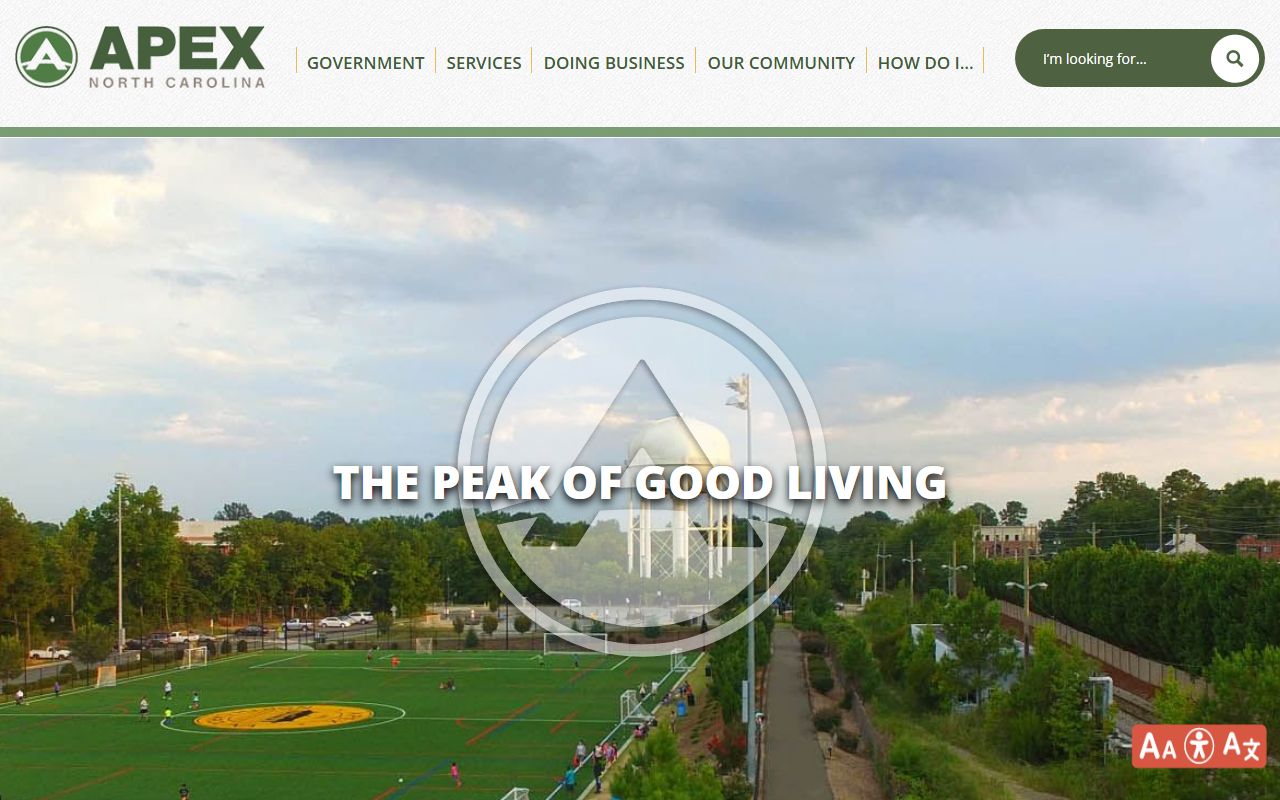
The town website at apexnc.org offers resident services including utility payments, building permits, and council meeting agendas that can provide context for property research in Apex.
For a full title search on Apex property, you need a licensed attorney or title company. The Register of Deeds records and indexes documents but does not search titles. A title professional traces ownership through every transaction in the Apex deed records. They check for liens, judgments, easements, and other claims on the property. Most lenders require this step before they approve a mortgage on Apex real estate.
Recording Apex Deeds
North Carolina follows a race to record system. Under G.S. 47-18, the first person to record a deed holds priority. An unrecorded deed cannot protect you against a later buyer who pays value and records first. After closing on Apex property, the deed must go to the Wake County Register of Deeds right away. Speed matters in a race to record state.
Each deed must meet format and content rules before recording. The document must be signed by the grantor and acknowledged before a notary public. The drafter's name must appear on the first page for deeds executed after January 1, 1980. This is required by G.S. 47-17.1. The Register of Deeds stamps the deed with the date, time, and book and page number once it is accepted. This stamp proves when the Apex deed was recorded and sets its priority.
Apex Deed Format Standards
Documents filed as Apex deed records must follow state format rules set out in G.S. 161-14. The requirements are straightforward. Paper must be 8.5 by 11 inches or 8.5 by 14 inches. The top of the first page needs a three-inch blank margin. All other margins must be at least half an inch. Use black ink on white paper. Font size must be at least nine points. Print on one side only.
The instrument type must be named at the top of the first page. This helps the Register of Deeds classify and index the document correctly. A deed labeled "Warranty Deed" at the top is easier to index than one with no label. Documents that do not meet the format rules are charged a $25 nonstandard fee on top of the regular recording cost. Following the rules from the start saves money on Apex deed records.
Apex Recording Fees
Recording fees for Apex deed records follow the statewide schedule. The NCARD fee schedule sets these rates for all 100 counties in North Carolina:
- Standard deed: $26 for first 15 pages, $4 per additional page
- Deed of trust or mortgage: $64 for first 35 pages
- Plat: $21 per sheet
- Nonstandard document surcharge: $25
- Multiple instruments as one: $10 each additional
- Satisfaction instruments: no fee
The excise tax on Apex property sales is separate from recording fees. Under G.S. 105-228.30, the seller pays $1 for every $500 of the sale price. This tax must be paid to the Wake County Register of Deeds before the deed is recorded. For a $350,000 Apex home, the excise tax would be $700. Both the recording fee and excise tax are due at the time of filing.
Apex Deed Records Indexing
The Wake County Register of Deeds maintains full alphabetical indexes of all recorded instruments. Under G.S. 161-22, the office must keep grantor and grantee indexes that cover every party to every recorded deed. The grantor index lists sellers. The grantee index lists buyers. Both show the book and page where the deed is recorded.
These indexes are essential for title searches on Apex property. Without them, finding a specific deed record would be extremely difficult. The indexes are updated as new documents come in. Cross-referencing means you can find any Apex deed record from either the buyer or seller name. The new software at the Wake County office has improved the speed and accuracy of index searches for Apex deed records.
Electronic Recording for Apex
Wake County supports electronic recording for deed filings. Attorneys and title companies can submit Apex deed records online through approved vendors. The Uniform Real Property Electronic Recording Act, found in G.S. 47-16.1 through 47-16.7, authorizes this process. Electronic documents and signatures have the same legal effect as paper filings. The NC Secretary of State adopts standards through the Electronic Recording Council.
Electronic filing is much faster than mail or in-person visits. An Apex deed submitted online can be recorded in minutes. The document receives a time stamp and book and page assignment. The same fees apply. The NCARD website lists counties that accept electronic submissions and the document types they support. For the growing Apex market, electronic recording keeps pace with the high volume of transactions.
Tax Certification for Apex Deeds
Under G.S. 161-31, Wake County can require tax certification before recording deeds. This means the county tax collector must confirm that no delinquent taxes are a lien on the Apex property. A closing attorney can bypass this step by including a statement in the deed. The attorney certifies that any delinquent taxes will be paid from closing proceeds. This is a common practice in Apex real estate transactions.
Property taxes in Wake County attach on January 1 and remain until paid. Real estate is permanently listed, so owners do not need to relist each year. Tax bills go out in July. The NCARD directory has contact details for the Wake County Register of Deeds for questions about tax certification and other aspects of Apex deed records.
Wake County Deed Records
All Apex deed records are part of the Wake County system. The county Register of Deeds serves Apex, Raleigh, Cary, and every other municipality in Wake County. For complete details on office hours, recording procedures, search tools, and contact information, visit the Wake County deed records page.