
Hoke County Deed Records Guide
Hoke County deed records cover all land transfers from 1911 to the present day. Created on February 17, 1911, from parts of Cumberland and Robeson Counties, Hoke County is one of the newer counties in North Carolina. The Register of Deeds office in Raeford keeps every deed, deed of trust, plat, and other real estate document on file. Hoke County deed records are available through a remote access site online. The county also requires tax collector certification before accepting deed transfers. This page explains how to search, file, and use Hoke County deed records.
Hoke County Deed Records Quick Facts
Hoke County Register of Deeds Office
The Hoke County Register of Deeds has its office at 113 Campus Ave, Raeford, NC 28376. You can call 910-875-2035 or fax 910-875-9554. The courthouse address is 304 N Main Street, Raeford, NC 28376. Staff can help with deed searches, copy requests, and new filings.
Hoke County was formed in 1911 from Cumberland and Robeson Counties. The Register of Deeds has birth, marriage, death records, and land records from that year forward. There is no known history of courthouse disasters in Hoke County. This means the deed record collection is complete from the county's formation.
Search Hoke County Records Online
The Hoke County Register of Deeds remote access site lets you search deed records from home. The system has been updated to reflect new indexing standards in North Carolina. Users must acknowledge a legal disclaimer before searching. The site uses PDF format images, so you need Adobe Acrobat or another PDF viewer to see documents.
The image below shows the Hoke County remote access search site.
You can access Hoke County records through the county government portal as well.
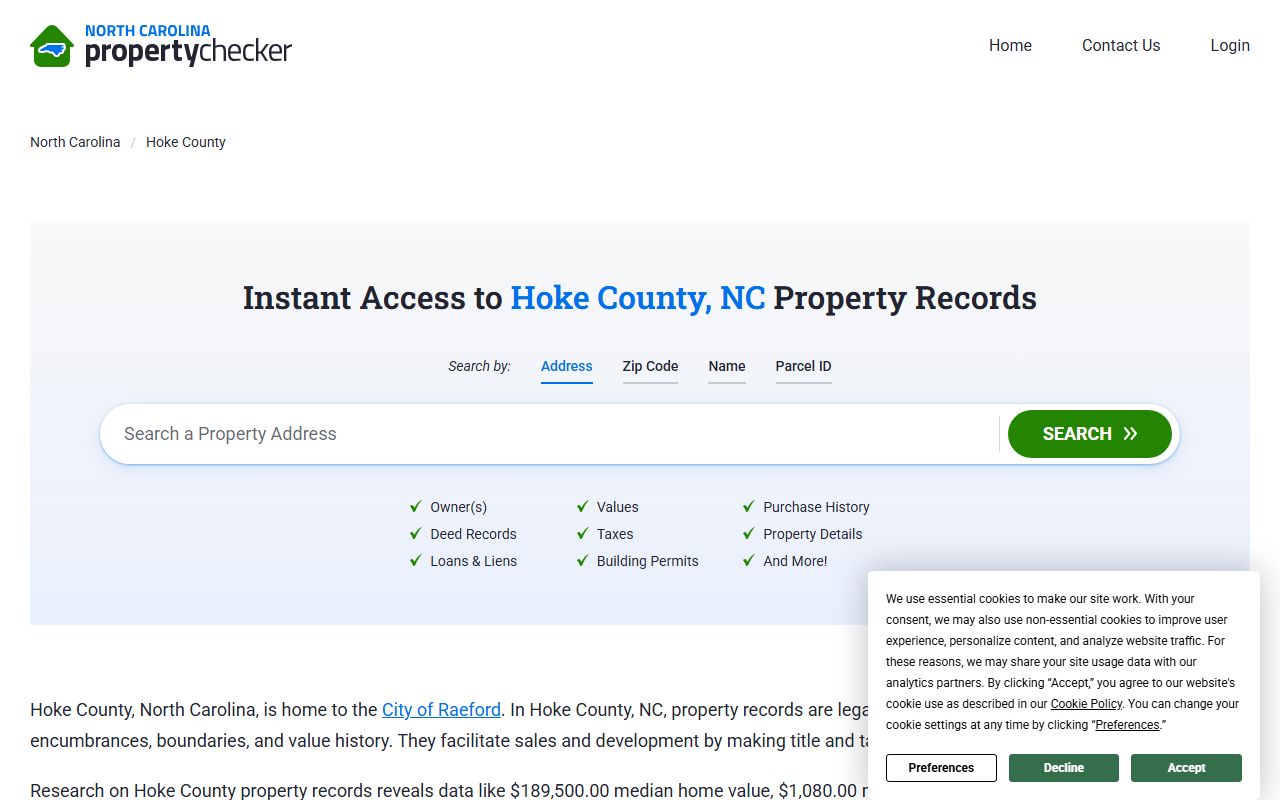
Both portals connect to the same underlying record system.
Hoke County Tax Certification Rule
Hoke County has an important rule for deed transfers. Since August 1, 2014, the county requires Tax Collector certification before the Register of Deeds will accept a deed transfer. This means you must take your deed to the Tax Office first. The Tax Collector must verify that no delinquent taxes are a lien on the property.
This requirement comes from G.S. 161-31. The statute lets county commissioners require this certification by resolution. Hoke County adopted this policy to ensure all property taxes are current before land changes hands. Your deed must have the required stamps and signatures from the Tax Office before the Register of Deeds will record it.
A closing attorney can bypass this step. If the deed contains a statement that the attorney will pay any delinquent taxes from closing proceeds, the register will accept it without tax certification.
Hoke County Property Alerts
Hoke County offers a property notification service. You can register your name to receive an email alert when a document is filed under your name. This helps protect against fraud. If someone tries to record a deed or lien using your name, you will know right away.
Sign up through the Hoke County Register of Deeds website. The service is free. It adds a layer of security to your property ownership in Hoke County.
Recording Fees in Hoke County
Hoke County uses the same fee schedule as every other North Carolina county. Under G.S. 161-10, a standard deed costs $26 for the first 15 pages and $4 per page after. Deeds of trust cost $64 for the first 35 pages plus $4 per extra page. Nonstandard documents incur a $25 surcharge. Plats are $21 per sheet. Satisfaction instruments have no fee.
Under G.S. 105-228.30, the excise tax is $1 per $500 of the sale price. The seller pays this before the deed is recorded. The NCARD fee schedule lists all current rates.
How to File a Deed in Hoke County
Filing a deed in Hoke County involves several steps. First, prepare the deed. The grantor must sign it. A notary must acknowledge the signature. The document must meet state format rules under G.S. 161-14. Use 8.5 by 11 or 8.5 by 14 inch paper with proper margins and black ink.
Next, take the deed to the Hoke County Tax Office. Get the required tax certification stamps. Then bring the deed to the Register of Deeds at 113 Campus Ave in Raeford. Pay all fees and the excise tax. The register stamps the date and time on the document.
Under G.S. 47-18, North Carolina is a race to record state. The first to file has priority. Record your deed as soon as possible after closing.
Hoke County Land Record History
Hoke County has a clean record history. No courthouse disasters have affected the collection. Every deed from 1911 forward is on file. The FamilySearch genealogy guide confirms this. Researchers can trace land ownership from the county's creation to the present day without gaps.
The NCARD directory lists Hoke County and all other counties. The Secretary of State oversees land records management. These resources help you navigate deed records across North Carolina.
Since Hoke County was formed from parts of Cumberland and Robeson Counties, early land that now sits in Hoke County may have its first deeds on file in one of those two parent counties. Researchers who need the full chain of title for a Hoke County parcel should check both the Hoke County deed records from 1911 onward and the older records in Cumberland or Robeson County for any deeds filed before 1911.
The image below shows the state document recording standards that apply to Hoke County.
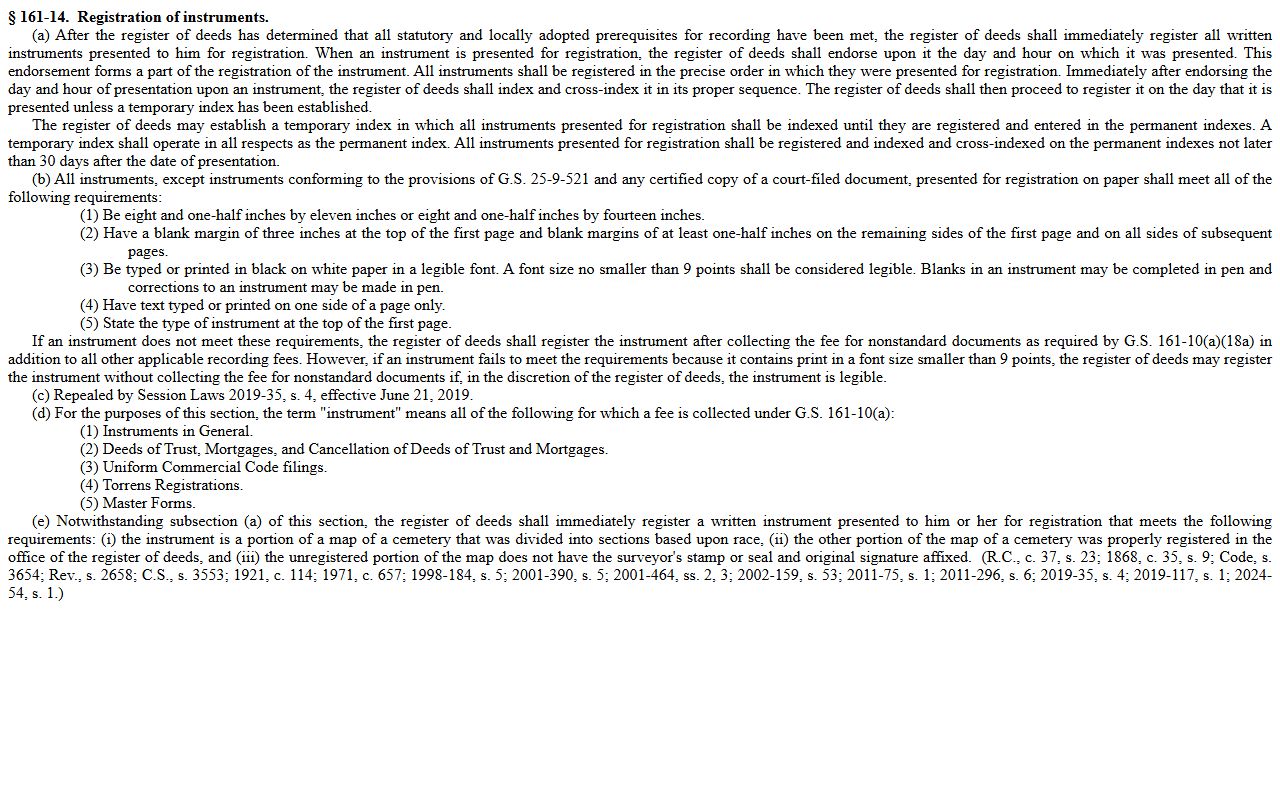
All documents filed in Hoke County must meet these state formatting rules.
Nearby Counties
Hoke County was carved from Cumberland and Robeson Counties. These and other nearby counties maintain their own deed records.